
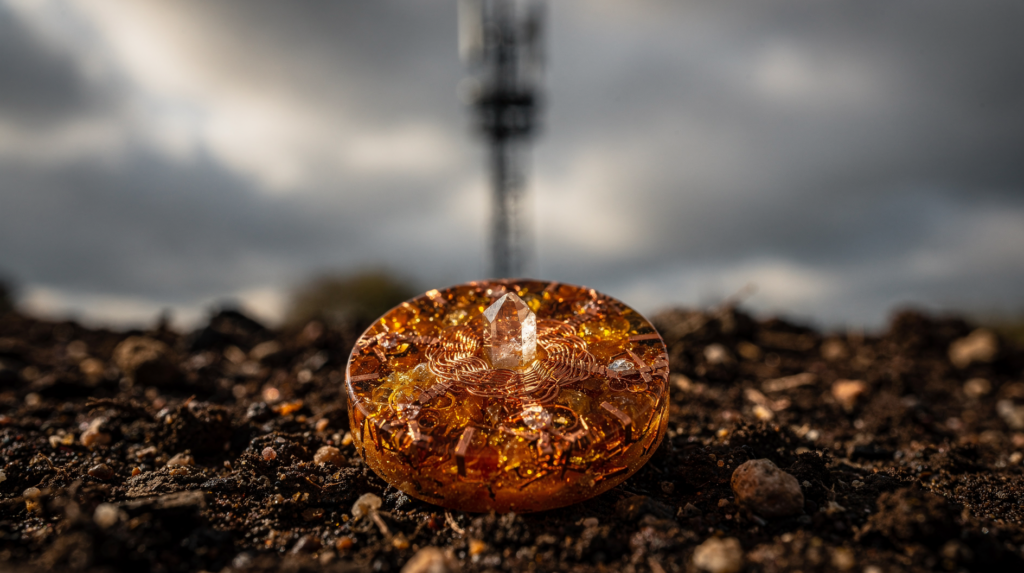
The tower buster is the most widely made and distributed orgonite device in the world. Small, inexpensive, and simple to cast, it was designed by Don Croft in the early 2000s as a practical tool for neutralising the energetic influence of cell towers, electrical infrastructure, and other sources of electromagnetic and environmental stress. This guide covers everything you need to know to make and use your own.
What Is a Tower Buster?
A tower buster (TB) is a small orgonite disc or cylinder, typically cast in a standard muffin tin mould. The name comes from its original purpose: burying or placing one near a cell tower or telecommunications mast. Don Croft — who popularised orgonite gifting worldwide — believed that placing tower busters near sources of electromagnetic radiation would convert the harmful energy into a neutral or beneficial form.
A standard tower buster contains: metal shavings (copper, aluminium, or steel), polyester or epoxy resin, and at least one small quartz crystal. Some makers add black tourmaline chips or shungite powder for additional EMF interaction.
Materials You Need
- Metal shavings — copper is preferred, aluminium or steel work well
- Polyester or epoxy casting resin + catalyst/hardener
- Small quartz crystal points — one per mould minimum
- Muffin tin or silicone mould (standard cupcake size)
- Mixing cups and stir sticks
- Optional: black tourmaline chips, shungite powder, dried flowers
Step-by-Step: How to Make a Tower Buster
Step 1 — Prepare your moulds. Lightly coat the inside of a metal muffin tin with petroleum jelly or cooking spray for easy release. Silicone moulds need no preparation.
Step 2 — Fill with metal shavings. Fill each mould cavity approximately halfway with metal shavings. The ratio should be roughly 50% metal to 50% resin when finished.
Step 3 — Place the crystal. Press a small quartz crystal point into the centre of the metal shavings, tip pointing upward (toward where the top of the finished piece will be).
Step 4 — Mix the resin. Follow the manufacturer’s instructions for your specific resin. Mix thoroughly to avoid soft spots. Work in a ventilated area — resin fumes are strong during catalysis.
Step 5 — Pour the resin. Pour slowly to avoid air bubbles. Fill to the top of the mould. The resin will penetrate the metal shavings as it settles.
Step 6 — Cure. Leave undisturbed for 24 hours minimum. Polyester resin cures faster than epoxy. Full strength is achieved after 48-72 hours.
Step 7 — Demould. Flex the mould or use a thin spatula to release the finished tower busters. Sand the bottom if needed.
How to Use a Tower Buster
Tower busters are typically placed outdoors near the base of cell towers, smart meters, electrical substations, or any location the maker considers energetically problematic. They can be buried shallowly in the ground, placed in bushes, or simply left nearby. Indoors, they work well placed near WiFi routers, smart meters on exterior walls, or computer workstations.
Learn More
- Tower Busters: What Are They and Do They Work?
- How to Make Orgonite at Home: Beginner’s Guide
- Don Croft and the Evolution of Orgonite
- EMF Protection with Orgonite: What the Research Says