
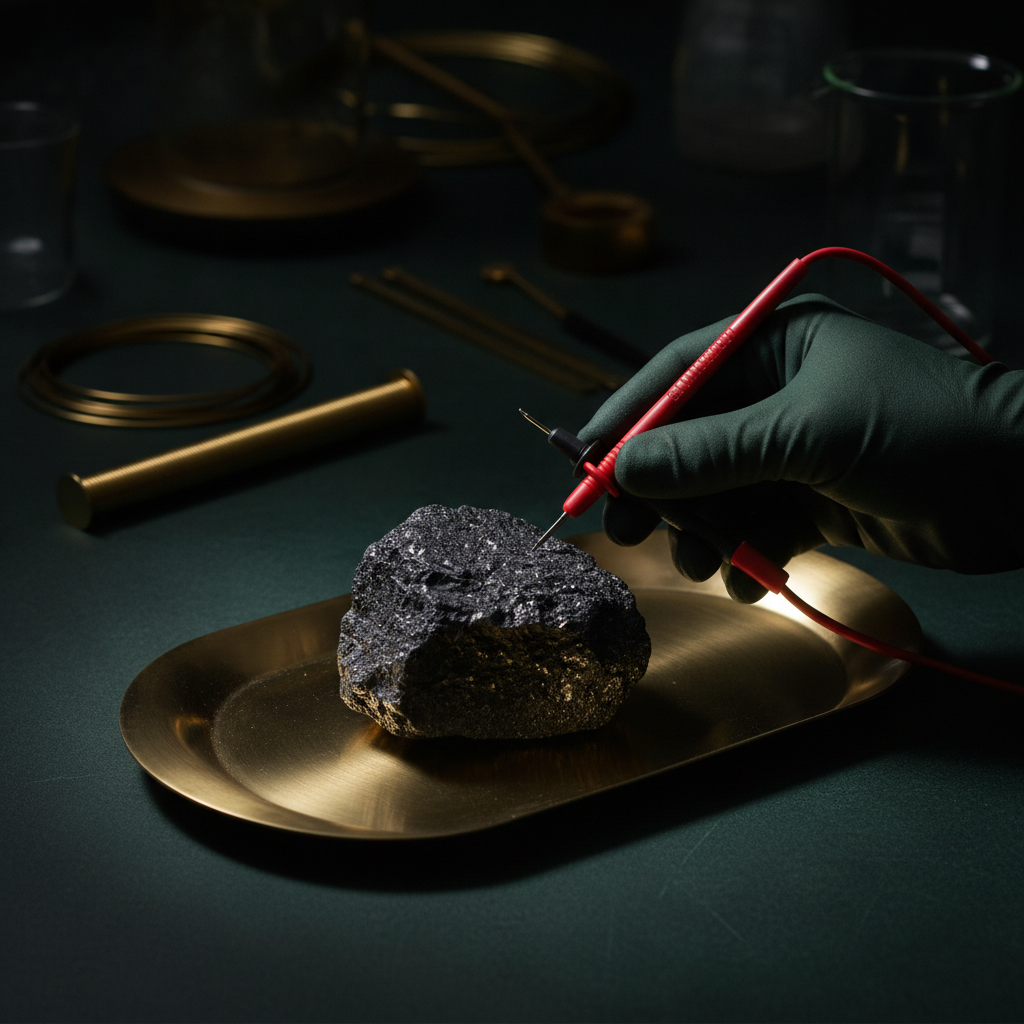
Shungite, a unique carbon-rich mineral, has gained significant attention for its distinctive properties. However, its increasing popularity has also led to a proliferation of counterfeit products in the market. Identifying authentic shungite is crucial for anyone seeking to experience its genuine characteristics, as many fakes lack the specific mineralogical composition that defines true shungite. This guide provides practical, reliable methods to help you distinguish real shungite from imitations.
What Is the Most Reliable Authentic Shungite Test?
The most reliable authentic shungite test is assessing its electrical conductivity. Genuine shungite, particularly the elite variety, possesses unique conductive properties due to its high carbon content. This characteristic distinguishes it from many other minerals and common fakes, making conductivity a primary indicator of authenticity that can be easily verified with simple tools.
Shungite’s conductivity stems from its unique carbon structure, which includes naturally occurring fullerenes, according to some theories. To perform a conductivity test, you will need a multimeter or a simple circuit consisting of a battery (e.g., AA or 9V), an LED light, and two wires. If using a multimeter, set it to resistance mode (ohms). Touch the probes to two different points on the shungite piece. Authentic shungite will show a low resistance reading (close to zero ohms), indicating it conducts electricity. If using the battery-LED circuit, connect the wires from the battery to the LED, ensuring the LED lights up. Then, break the circuit and insert the shungite piece between the wires. If the LED illuminates, the shungite is conductive. Most other black stones, such as obsidian, onyx, or black tourmaline, are not electrically conductive.
How Can Visual Inspection Help Identify Real Shungite?
Visual inspection offers initial clues for identifying real shungite by examining its texture, color, and natural imperfections. Authentic shungite typically presents a unique appearance, ranging from a deep matte black to a lustrous, silvery sheen, often with visible mineral inclusions or slight variations in its surface, which are key indicators of its natural origin.
When examining shungite, look for the following visual cues:
- Color and Sheen: Regular shungite is typically a deep, matte black. It may appear somewhat dull and can sometimes leave a slight black residue on your hands, similar to coal. Elite shungite, conversely, has a striking metallic, silvery luster and is much shinier.
- Texture and Imperfections: Authentic shungite often has a slightly uneven or rough texture. It may display natural veins, streaks of lighter minerals (like quartz or pyrite), or small fissures. These are natural inclusions and are signs of its genuine, unrefined state. Fakes often appear too uniform, perfectly smooth, or unnaturally colored.
- Weight: Shungite is relatively lightweight for its size compared to many other stones, especially elite shungite due to its high carbon content. While not a definitive test, an unusually heavy or light black stone might warrant further investigation.
- Dust/Residue: As mentioned, regular shungite can sometimes leave a fine black dust on your fingers, particularly when first handled or rubbed. This is a characteristic of its carbon composition and is generally not seen with fake stones.
What Are the Characteristics of Elite Shungite vs. Regular Shungite?
Elite shungite, also known as Noble Shungite, is characterized by its high carbon content (up to 98%) and a distinct silvery, metallic luster, making it more fragile. Regular shungite, or Petrovsky Shungite, has a lower carbon content (30-80%), a matte black appearance, and is denser and more robust, offering different aesthetic and practical qualities.
Understanding the differences between these two primary types of shungite is crucial for proper identification and for ensuring you acquire the specific type you intend. Elite shungite is considered the purest form, with a carbon content that can reach up to 98%. Its appearance is striking: a bright, silvery metallic sheen that often reflects light. It is also quite brittle and typically found in irregular, raw fragments rather than polished shapes. Due to its high carbon content, elite shungite is exceptionally conductive.
Regular shungite, which is more common and often used for carved objects and polished forms, has a carbon content ranging from approximately 30% to 80%. It has a matte, deep black appearance and is much denser and more robust than elite shungite, making it suitable for shaping. While still conductive, its electrical conductivity is generally lower than that of elite shungite due to the presence of more silicate minerals.
| Feature | Elite Shungite | Regular Shungite |
|---|---|---|
| Carbon Content | Up to 98% | 30-80% |
| Appearance | Silvery, metallic luster, often irregular | Matte black, solid, uniform |
| Conductivity | Very high | High |
| Hardness | Fragile, brittle | Denser, more robust |
| Dust/Residue | Minimal | Can leave black residue |
| Rarity | Rarer, higher cost | More common, lower cost |
Why Is Source Verification Important for Shungite Authenticity?
Source verification is crucial for shungite authenticity because the only known significant deposit of genuine shungite is located in the Republic of Karelia, Russia. Confirming a reputable supplier who can trace their material directly to this region provides strong assurance against counterfeit products from unknown origins, which may lack the unique properties of true shungite.
The unique geological conditions in Karelia are believed to be responsible for shungite’s formation and its distinctive carbon structure. Therefore, any shungite not originating from this region is highly unlikely to be genuine. When purchasing shungite, inquire about its origin. Reputable vendors should be able to provide clear information about their sourcing, often including certificates of authenticity or origin from their suppliers in Karelia. Be wary of sellers who are vague about the source, claim their shungite comes from other locations, or offer prices that seem unusually low for genuine material. Investing in shungite from a trusted, transparent source significantly reduces the risk of acquiring a fake.
What Are Common Shungite Fakes and How to Spot Them?
Common shungite fakes include dyed stones, plastic, or other non-conductive minerals that mimic its appearance. These imitations often lack shungite’s characteristic electrical conductivity, natural texture, and specific gravity, making them detectable through simple tests and careful observation, especially when compared to genuine samples.
Several materials are commonly passed off as shungite:
- Black Tourmaline or Obsidian: These are natural black stones that can sometimes resemble shungite. However, neither is electrically conductive, making the conductivity test a definitive way to distinguish them. They also tend to be harder and lack the slight dustiness of regular shungite.
- Dyed Onyx or Other Stones: Some stones are dyed black to imitate shungite. These will typically have a very uniform, often glossy, appearance that might seem too perfect. The dye might also rub off over time, and they will fail the conductivity test.
- Coal or Anthracite: While also carbon-rich, coal and anthracite generally do not contain the unique fullerene structures associated with shungite and may not exhibit the same level of conductivity or specific gravity. They can also be very brittle and leave significant black residue.
- Plastic or Resin: Cheap fakes are sometimes made from black plastic or transparent casting resin. These are usually lightweight, might feel warm to the touch (unlike stone), and will not be conductive. They often lack any natural imperfections or variations in texture.
By combining the electrical conductivity test with careful visual inspection and source verification, you can significantly improve your ability to identify authentic shungite and avoid common fakes. Always prioritize purchasing from knowledgeable and transparent suppliers.
Related Reading
Orgonite and orgone energy devices are presented as tools for energy balancing and spiritual wellness. They are not intended as replacements for medical treatment. Consult a qualified healthcare professional for any health-related decisions.