Most people interested in orgone energy know the names Wilhelm Reich and Karl Hans Welz. Far fewer have heard of Hermann Plauson — yet his work on atmospheric energy and passive ionization places him firmly in the tradition of researchers who dared to explore energy outside the mainstream.
Who Was Hermann Plauson?
Hermann Plauson was a Baltic German engineer and inventor who worked in the early 20th century. His most significant contribution was a detailed technical study of how to harness atmospheric electricity — the natural charge present in the upper atmosphere — as a practical energy source
The Science of Passive Ionization
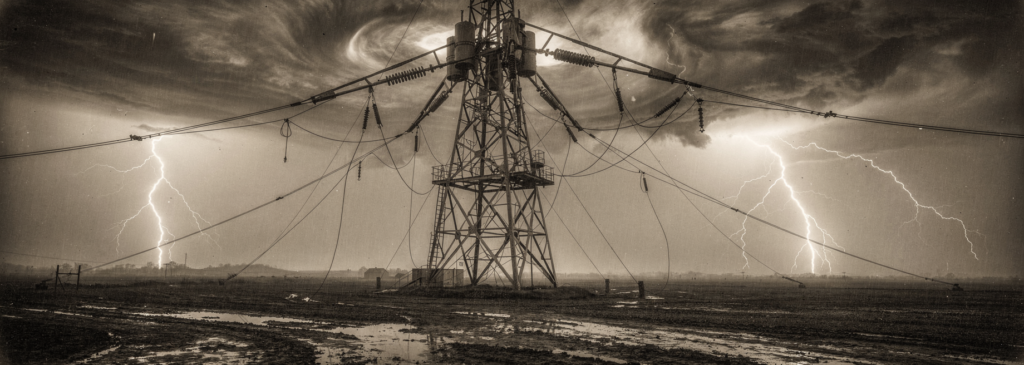
Plauson’s key insight was that the atmosphere carries an enormous electrical potential — a charge differential between the ground and the upper atmosphere that, under the right conditions, could be tapped without active power input. He called this passive ionization: the process of drawing energy from the natural ionization of the atmosphere using grounded collectors and antenna systems.
In 1920 he was granted patents in multiple countries for devices designed to collect and convert this atmospheric energy into usable electricity. His 1921 book ‘Gewinnung und Verwertung der Atmosphärischen Elektrizität’ — translated as ‘Harnessing and Utilization of Atmospheric Electricity’ — remains one of the most detailed technical treatments of the subject ever written.
The Connection to Orgone Research
Plauson’s work predates Wilhelm Reich’s orgone theory by two decades, but the conceptual overlap is striking